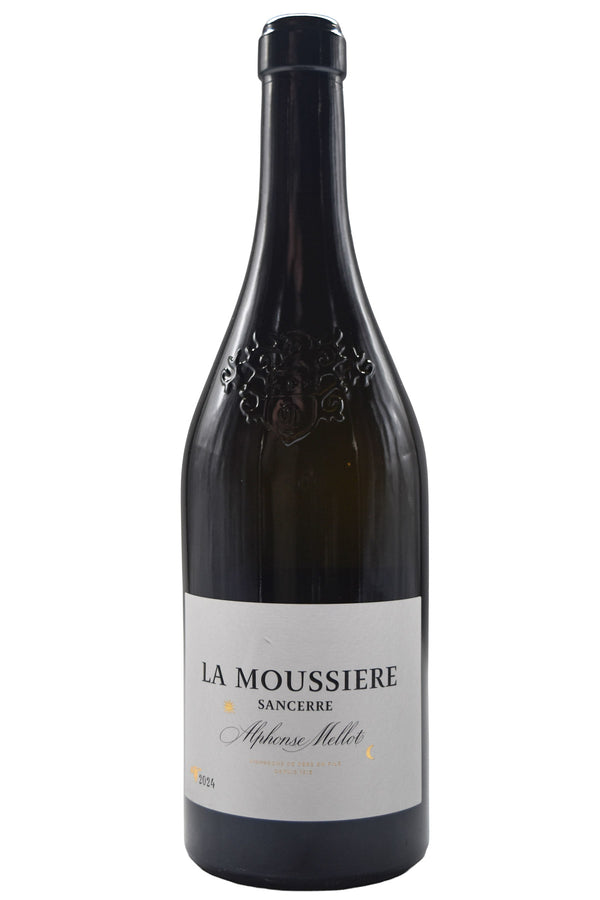
Alphonse Mellot
Great wine transports us. That may sound like magic, but it isn’t. And there’s no better way to get to the truth of it than to travel to the village of Sancerre and visit Alphonse... Read More
Great wine transports us. That may sound like magic, but it isn’t. And there’s no better way to get to the truth of it than to travel to the village of Sancerre and visit Alphonse Mellot.
If you visit, you will taste – and it will taste like magic. Each wine is its own little world. Some are unique expressions of Sauvignon Blanc with a complex framing of mineral and citrus, tropical and cooling notes. Others are so terroir focussed that the mineral and textural foreground pushes the Sauvignon Blanc character almost completely through the background and out of the frame.
But it isn’t magic that makes the wine. And that – the non-magicness of it all --will be Alphonse’s true lesson, above even how great his wines\ are.
You don't just taste. He will make sure you see the vineyards, each a site to behold: dramatic expositions (the ancient village of Sancerre often looming in the background), distinct stony soils, luscious, healthy-looking plants. “It starts in the vineyard,” everyone says; here you can really feel it.
It isn’t just the sites themselves -- it’s also the work going on there. The people. You see the team in the vineyard, sweating over every plant. All Mellot’s sites are farmed biodynamically (since 1999). That's brutally tough in Sancerre and only possible with this sort of laborious approach.
Almost no one works on this level in Sancerre. The fact is, Sancerre is so easy to sell you just don't have to work that hard. Even less-than-ordinary examples sell out every year.
So why bother? Mellot knows it's the only way to get the most out of each and every vine. And as the 19th generation of his family to tend their vines, there’s nothing he cares about more than preserving his family legacy. You see it in the vines, you see it in the cellars deep under the town's central square (where traditional techniques are monitored with exquisite technical precision and balanced with new techniques (like specially-designed concrete fermenters) to respond to a changing climate and a changing world. And most of all you see it in the wines.
When we talk about our favorite Sancerres with people who are wine lovers more than Sancerre lovers, we often compare the region to Burgundy: single grape, different terroirs, fascinating and delicious diversity. And when we talk about them to Sancerre fans who are only “single-vineyard curious,” we rave about the wines’ ability to do everything that an “ordinary” Sancerre does – and so much more.
Both are true. And whichever camp you are in, these are wines worth your time