Left Continue shopping
Your Order

You have no items in your cart

OCTOBER 2025

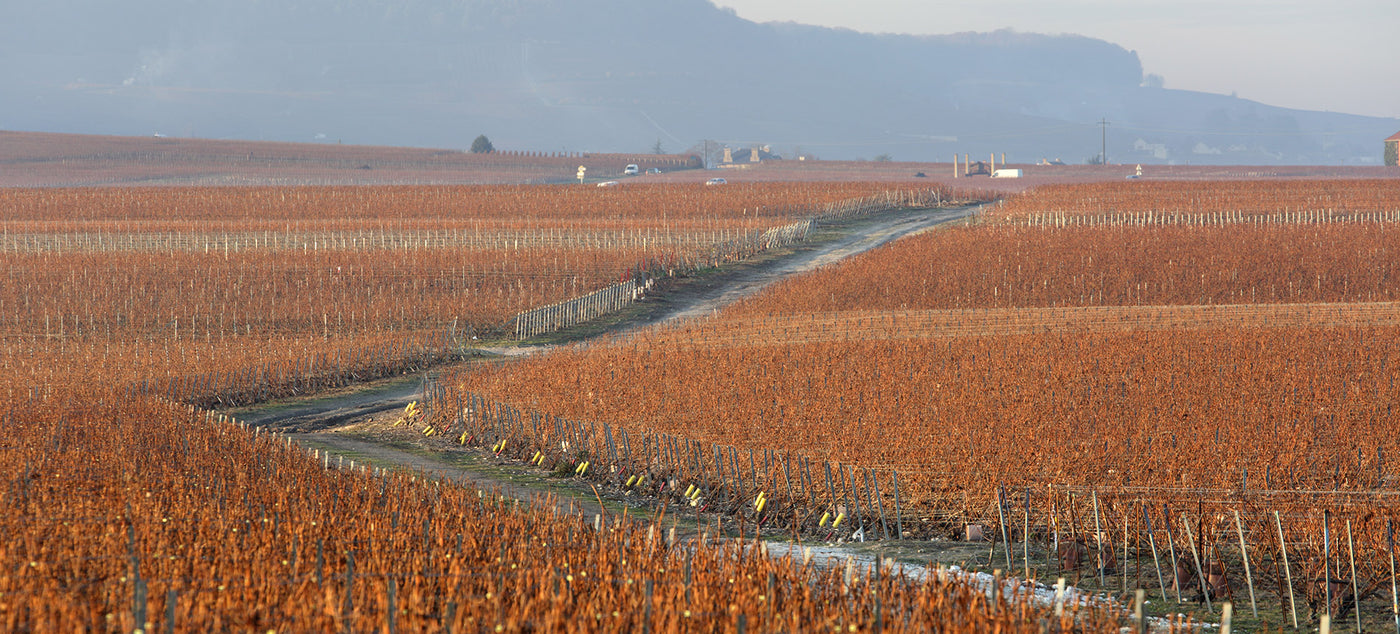
Côte des Blancs.” The evocative name alone tells us this Champagne subregion is special. French for “Hillside of White,” it gets right to the heart of what makes it unique: subsoils so chalky, topsoils so thin, that the slopes are named for their coloring. 

That’s a far cry from Champagne’s other most famous regions. The Montagne de Reims is, of course, named for the mountain of Reims. And the Vallée de la Marne, for the banks of the Marne River. Those are spectacular terroirs and make magnificent wines. But they are regions defined by natural landmarks, not a singular soil type.

Of course, Côte des Blancs could as easily refer to the subregion’s other striking difference, the Chardonnay grapes that constitute over 97% of the Côte’s plantings. No other part of Champagne has such a tight marriage between terroir and variety. But that’s no accident : that marriage of Chardonnay and the Côte’s ancient chalk in this northern setting is what gives the wines their distinctive, bright voice, their salinity, length and, of course, finely-etched minerality. 

As important as they are, the Côte des Blancs isn’t just soil and grape. It is a special terroir in every respect. A single line of villages running north-south, with vineyards predominantly facing east towards  the gentler morning sun, it’s a subregion that finds a quintessential cool-climate, acid-preserving ripeness. The fruit can be glorious, especially in warm years — but even then, the wines are taut, focused, finessed.

That distinctive voice can make us think of the Côte des Blancs as a monolith. Its relatively small size (just 12 miles long) adds to that sense. But as you’ll see from this month's selections, that’s just not the case. 

These are two beautiful wines from different Côte des Blancs villages, each clearly an expression of the magic of Chardonnay on this iconic chalk. But the wines are from different sites, made by different growers with different goals in mind. So, it shouldn’t be surprising that when you get right down to what’s in the bottle, the differences are just as striking as the similarities. 

EXTRA BRUT PICK NO. 1

Our thoughts on this selection

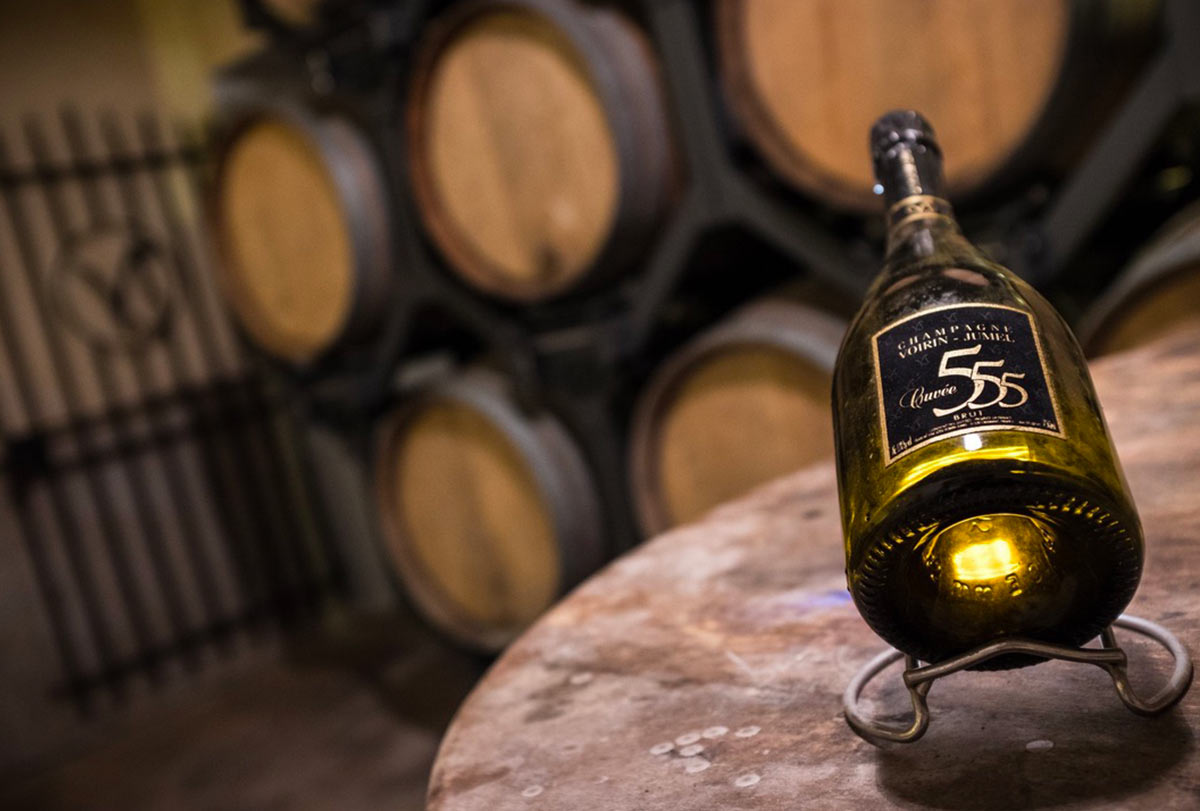
Voirin-Jumel is a small family grower with vines in Cramant and Chouilly, way up at the northern tip of the Côte. The V. 1 is their “calling card” wine – an introduction, as they see it, to the universe of Côte des Blancs Chardonnay. 

The Chardonnay (the wine is all Chardonnay) comes from Grand Cru sites, and you get the mineral signature on both the nose and the pallet, interwoven with the bright citrus and floral hint of the Chardonnay in this cool northern climate. 

But it isn’t just chalk and other high tones. There’s a distinct richness in the midpalate, an almost decadent contrast to the more linear elements, which is a signature of Chardonnay from these villages (especially Cramant), where many of the vineyards face south, not east, and get warmer mid-day sun. 

The Voirin-Jumel family makes many choices to accentuate this special expression of the Côte des Blancs. For this bottling they use a gentle 5 g/L of dosage — well within the extra brut window of 3-6 g/L — but happy to practice a tradition that long predates today’s focus on zero dosage wines. Make no mistake though, this is just a subtle touch that brings out the terroir’s more luxurious side as a  complement to the bright acidity and cooling minerality.The blending of vintages is at least as important. The family combines three vintages for every release of this bottling, not just to make the wine more complete); it also allows them to find just the balance they want for this unique expression of the marriage of variety to terroir. In this case 40% of the blend is from 2019 and 2020, which bring sunny Chardonnay accents to the cooler, leaner 2021 backbone. 

We love to drink Champagne with food, and the V.1 is lovely with a whole range, from shellfish to lighter meats to creamy dishes (chicken thighs braised in cast iron with morels sounds particularly good to us!). 

But you don’t have to fuss over pairings to enjoy this bottle. The family themselves treat it as their perfect aperitif wine, something to sip on while you cook dinner (or wait for your delivery). So open a bottle, maybe with a salty snack of potato chips, and whet your appetite while you wonder at the balance of chalky definition and ethereal Chardonnay decadence.

EXTRA BRUT PICK NO. 2

Our thoughts on this selection

If there’s one name in the Côte des Blancs that wine lovers know, it’s Mesnil. Home to both Krug’s Clos de Mesnil and ultra-exclusive Salon, the village of Le Mesnil-sur-Oger sits in the middle of the Côte with almost no topsoil over the chalk and one of most purely east-facing slopes. No wonder it is renowned for a style that is pretty much the polar opposite of Cramant: intense minerality, brilliant high-toned complexity, and gorgeous linear texture.Moncuit’s roots run deep in Mesnil.. The domaine is run by the mother and daughter team of Nicole and Valérie Moncuit, daughter and granddaughter of Pierre.  But the estate dates all the way back to the 19th century. This is a family dedicated to preserving the traditional expression of the village.

The domain’s roots also go deep in the literal sense. With some of the oldest vines in the village (the average age is around 60), root networks have worked their way through the chalk. And you can taste that pure terroir in the wine. At their core, these wines exude laser-focused  cut, and a  savory saline minerality Nicole and Valérie protect all the terroir purity, fermenting in steel and adding just a tiny dosage (3 g/L).That intensity and natural complexity also makes Mesnil wines some of the longest-lived Champagnes, and the 2012 is absolutely singing now. The vintage is considered one of the finest in recent memory g in Champagne, scintillating and intense with the perfect balance of ripeness and cut. . Now, 13 years on, it is still bright and fresh but is beginning to show some early mature flavors: the Chardonnay shows hints of almond paste, like a Grand Cru Chablis might, and the classic brioche comes with a seductive umami note.

Would this be stunning with a briny oyster? Of course. Would it make a fried chicken dinner into something magnificent? Yes it would. If you want to do something fancy – maybe grill the oysters New Orleans style and serve them topped with parm – this is the wine to open. But it’s also a wine you can just open and drink it on its own while you contemplate the magic of chalk and time. 

Opening the door to the Côte des Blancs… and walking through

If the V. 1 is an introduction to the Chardonnay of the Côte des Blancs, we think of the Moncuit as a deeper dive, an example of what a most singular terroir can do when given a great vintage and the time to fully reveal itself.

But considering them side by side brings us back to one of the great pleasures of exploring the wines of Champagne: marveling as a region that is so singular and so identifiable begins to reveal itself to be richly diverse and fractal-like.

Champagne may be the most distinctive wine region in the world. But when we dive a little deeper we find that individual subregions — for all their similarities — have unique identities. And while the Montagne de Reims’ Grand Cru Pinot Noir has a power that is totally distinct from Marne Valley’s complex Pinot Meunier-blends, no region speaks with such an identifiable voice as does the Côte des Blancs.

And yet, even here, we see once again, that the subtle variations in terroirs just a few kilometers apart, shifts in exposition, or a vigneronne’s particular intention or focus, make for wines that are beautifully distinct.


GROWER CHAMPAGNE

A guide to the best bubbles in the world and what makes them different from the Grandes Marques

Champagne is the world’s most famous sparkling wine. Hailing from the Champagne regions of France, its biggest names are among the biggest names in wine: Moet, Dom Perignon, Veuve Clicquot, Cristal.

But there’s another side to Champagne: a universe of small-scale producers preserving ancient family farming traditions and bottling wines you’ve never heard of.

These are the Grower Champagnes.

We're here to help

Have a burning question or just want to connect with our team of fellow Champagne lovers?