
Andre Heucq Champagne Extra Brut Heritage Assemblage NV is backordered and will ship as soon as it is back in stock.
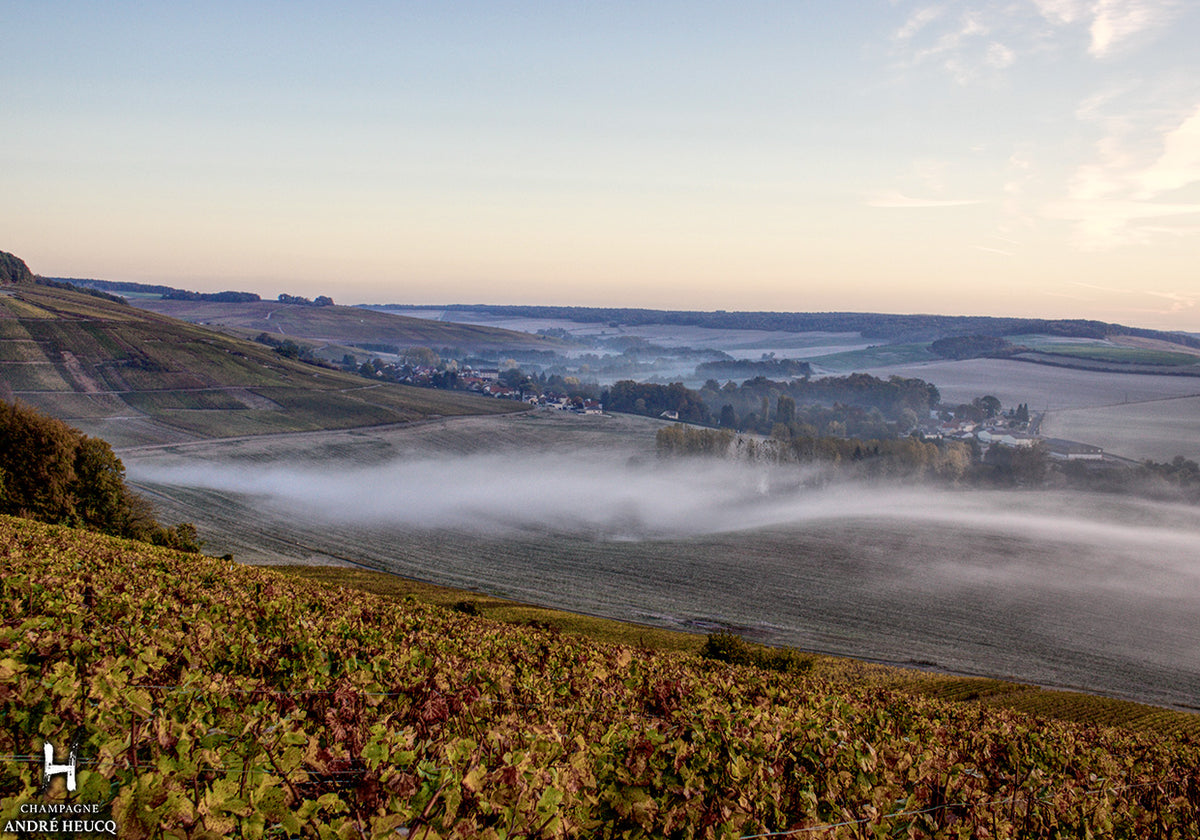
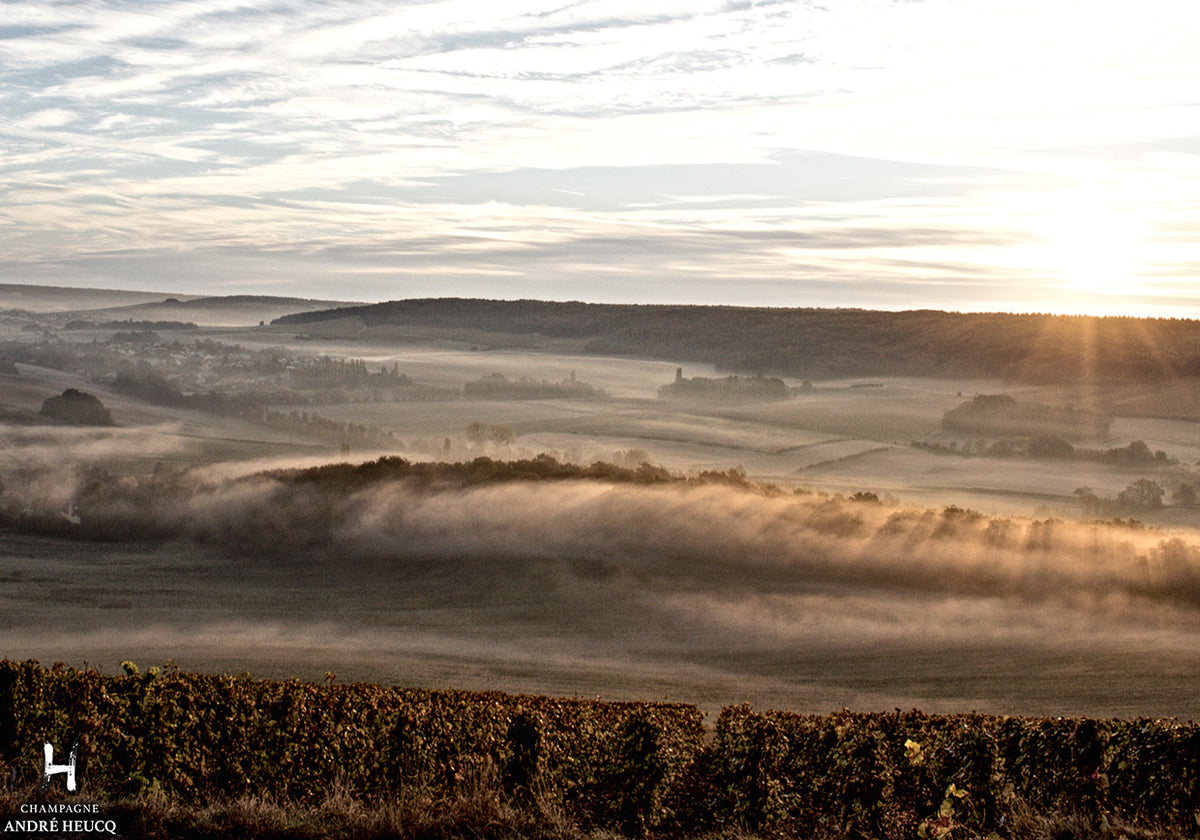
This is Andre Heucq's heritage bottling, the fourth-generation family's flagship blend and a snapshot of their organic corner of the Vallee de la Marne around the village of Cuisles. It draws on multiple vintages and all three Champagne grapes, 40% Chardonnay with 30% each of Pinot Noir and Meunier, part of it fermented in barrel and the rest in stainless, then given a long five years on the lees. Disgorged Extra Brut at just one gram of dosage, it is textured, complete and quietly serious. Grower Champagne of real substance, and a bottle better suited to the dinner table than to a single toast.
Shipping
Shipping
Every step of the journey is managed to uphold the integrity of each bottle.
- Nationwide Access: Flat-rate shipping available to most U.S. states with delivery in 3-5 business days.
- Temperature-Monitored Shipping: We closely monitor weather conditions and make informed decisions to ensure shipments travel safely, with insulated packaging and refrigerated transport available when required.
- Wine-Specific Protective Packaging: Specialized materials designed to maintain label integrity and prevent breakage during transit.
- Provenance Assured: All wines are maintained in climate-controlled conditions at our shop until the moment of dispatch.
Returns & Exchanges
Returns & Exchanges
We stand behind every bottle we sell.
- Corked wine? Full refund or exchange within 60 days
- Damaged shipment? Contact us within 48 hours
- Storage or quality concerns? We're here to help
Have Questions?
Have Questions?
Our team is here to help.
Hours
Sunday - Thursday: 12 pm - 8 pm
Friday: 11am - 9pm
Saturday: 10am - 9pm
Email: help@flatiron-wines.com
Phone: (212) 477-1315
Extra Brut - Champagne Selections
View all-
 Sold out
A. Margaine Champagne 1er Cru Le Brut NV
$5499Unit price -
 Sold out
Andre Heucq Champagne Cuvee Oeuf 2023
$10499Unit price -
Andre Heucq Champagne Extra Brut Heritage Assemblage NV
$6299Unit price -
Sold out
Andre Heucq Champagne Parcellaire Les Roches 2017
$11199Unit price -
Barrat-Masson Champagne Extra Brut Grain d'Argile NV ['16 Base]
$6999Unit price -

Benoit Lahaye Champagne Extra Brut Blanc de Noirs NV
$9399Unit price -
-
![Bottle of Brice Champagne Bouzy Grand Cru Blanc de Noirs Brut NV ['20 Base]-Sparkling Wine-Flatiron SF](data:image/svg+xml,%3Csvg%20xmlns='http://www.w3.org/2000/svg'%20viewBox='0%200%20900%201350'%3E%3C/svg%3E)
Brice Champagne Bouzy Grand Cru Blanc de Noirs Brut NV ['20 Base]
$5999Unit price


![Bottle of Barrat-Masson Champagne Extra Brut Grain d'Argile NV ['16 Base]-Sparkling Wine-Flatiron SF](http://sf.flatiron-wines.com/cdn/shop/files/Bottle-of-Barrat-Masson-Champagne-Extra-Brut-Grain-dArgile-NV-16-Base-Sparkling-Wine-Flatiron-SF.jpg?v=1743634596&width=460)


![Bottle of Brice Champagne Bouzy Grand Cru Blanc de Noirs Brut NV ['20 Base]-Sparkling Wine-Flatiron SF](http://sf.flatiron-wines.com/cdn/shop/files/Bottle-of-Brice-Champagne-Bouzy-Grand-Cru-Blanc-de-Noirs-Brut-NV-20-Base-Sparkling-Wine-Flatiron-SF.jpg?v=1746923949&width=460)

Andre Heucq Champagne Parcellaire Les Roches 2017 is backordered and will ship as soon as it is back in stock.
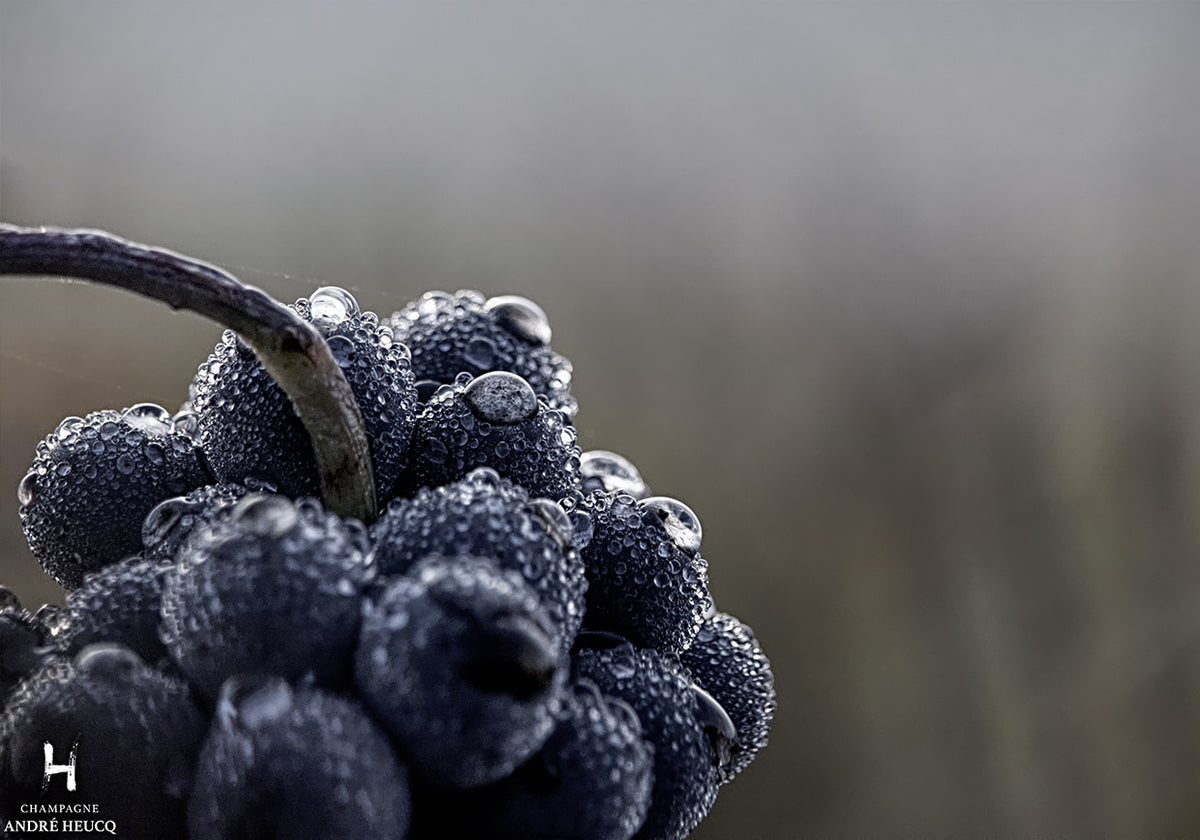
Vallée de la Marne.single parcel,100% Meunier in Jonquery with green clay soils. Malo-lactic fermentation, aged in Oak Barrels for 36 months. Zero dosage. Biodynamic practicing viticulture.
Shipping
Shipping
Every step of the journey is managed to uphold the integrity of each bottle.
- Nationwide Access: Flat-rate shipping available to most U.S. states with delivery in 3-5 business days.
- Temperature-Monitored Shipping: We closely monitor weather conditions and make informed decisions to ensure shipments travel safely, with insulated packaging and refrigerated transport available when required.
- Wine-Specific Protective Packaging: Specialized materials designed to maintain label integrity and prevent breakage during transit.
- Provenance Assured: All wines are maintained in climate-controlled conditions at our shop until the moment of dispatch.
Returns & Exchanges
Returns & Exchanges
We stand behind every bottle we sell.
- Corked wine? Full refund or exchange within 60 days
- Damaged shipment? Contact us within 48 hours
- Storage or quality concerns? We're here to help
Have Questions?
Have Questions?
Our team is here to help.
Hours
Sunday - Thursday: 12 pm - 8 pm
Friday: 11am - 9pm
Saturday: 10am - 9pm
Email: help@flatiron-wines.com
Phone: (212) 477-1315