

Hervieux Dumez Champagne Tradition NV is backordered and will ship as soon as it is back in stock.
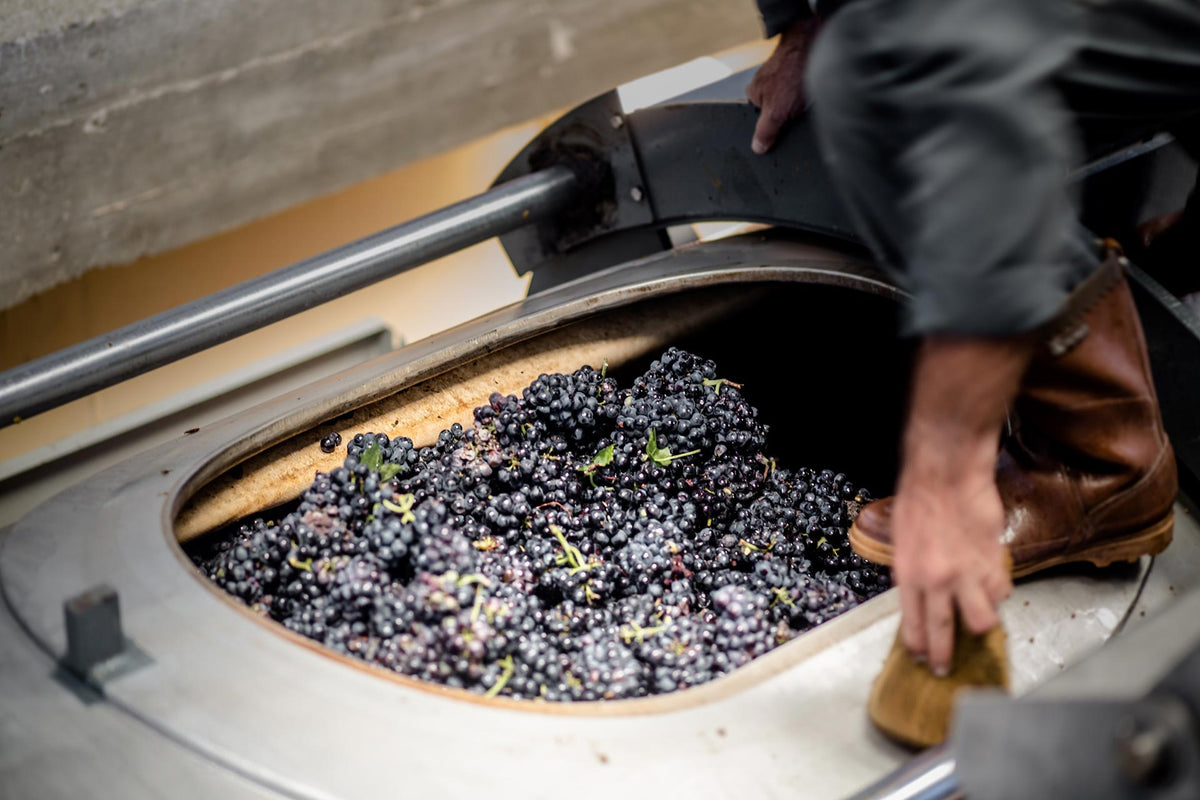
Sacy is not a village that shows up on many Champagne labels. It's a Premier Cru on the western flank of the Montagne de Reims, and four generations of the Hervieux and Dumez families have been quietly making wine there without much fuss. Tradition is their calling card: Pinot Noir leads, with Meunier and Chardonnay filling out the rest, drawn from Premier Cru parcels across Sacy, Chamery, Ecueil and Villedommange. The Meunier gives it a juicy, generous middle; the limestone underneath keeps it honest. This is grower Champagne doing the everyday job, an aperitif you can open on a Tuesday without ceremony.
Shipping
Shipping
Every step of the journey is managed to uphold the integrity of each bottle.
- Nationwide Access: Flat-rate shipping available to most U.S. states with delivery in 3-5 business days.
- Temperature-Monitored Shipping: We closely monitor weather conditions and make informed decisions to ensure shipments travel safely, with insulated packaging and refrigerated transport available when required.
- Wine-Specific Protective Packaging: Specialized materials designed to maintain label integrity and prevent breakage during transit.
- Provenance Assured: All wines are maintained in climate-controlled conditions at our shop until the moment of dispatch.
Returns & Exchanges
Returns & Exchanges
We stand behind every bottle we sell.
- Corked wine? Full refund or exchange within 60 days
- Damaged shipment? Contact us within 48 hours
- Storage or quality concerns? We're here to help
Have Questions?
Have Questions?
Our team is here to help.
Hours
Sunday - Thursday: 12 pm - 8 pm
Friday: 11am - 9pm
Saturday: 10am - 9pm
Email: help@flatiron-wines.com
Phone: (212) 477-1315
Extra Brut - Champagne Selections
View all-
 Sold out
A. Margaine Champagne 1er Cru Le Brut NV
$5499Unit price -
 Sold out
Andre Heucq Champagne Cuvee Oeuf 2023
$10499Unit price -
Andre Heucq Champagne Extra Brut Heritage Assemblage NV
$6299Unit price -
Sold out
Andre Heucq Champagne Parcellaire Les Roches 2017
$11199Unit price -
Barrat-Masson Champagne Extra Brut Grain d'Argile NV ['16 Base]
$6999Unit price -

Benoit Lahaye Champagne Extra Brut Blanc de Noirs NV
$9399Unit price -
-
![Bottle of Brice Champagne Bouzy Grand Cru Blanc de Noirs Brut NV ['20 Base]-Sparkling Wine-Flatiron SF](data:image/svg+xml,%3Csvg%20xmlns='http://www.w3.org/2000/svg'%20viewBox='0%200%20900%201350'%3E%3C/svg%3E)
Brice Champagne Bouzy Grand Cru Blanc de Noirs Brut NV ['20 Base]
$5999Unit price


![Bottle of Barrat-Masson Champagne Extra Brut Grain d'Argile NV ['16 Base]-Sparkling Wine-Flatiron SF](http://sf.flatiron-wines.com/cdn/shop/files/Bottle-of-Barrat-Masson-Champagne-Extra-Brut-Grain-dArgile-NV-16-Base-Sparkling-Wine-Flatiron-SF.jpg?v=1743634596&width=460)


![Bottle of Brice Champagne Bouzy Grand Cru Blanc de Noirs Brut NV ['20 Base]-Sparkling Wine-Flatiron SF](http://sf.flatiron-wines.com/cdn/shop/files/Bottle-of-Brice-Champagne-Bouzy-Grand-Cru-Blanc-de-Noirs-Brut-NV-20-Base-Sparkling-Wine-Flatiron-SF.jpg?v=1746923949&width=460)


Sanchez Le Guedard Champagne Brut Mes 3 Terroirs AS/100 Blage NV is backordered and will ship as soon as it is back in stock.
Three grapes, three terroirs -- hence the name -- from a family estate in Cumieres, the steep, sun-facing village of the Grande Vallee de la Marne that has always been Pinot country. Jose and Sebastien Sanchez are grower-winemakers several generations deep, farming with an organic bent and still riddling every bottle by hand. This cuvee leans on Pinot Noir, with Meunier and Chardonnay filling out the blend, and spends three years on the lees, which builds real depth without dulling the red-fruited drive that Cumieres is known for. They are members of the Club Tresors de Champagne, the tight circle of growers who bottle a Special Club cuvee -- good company, and a fair indicator of where their standards sit. Grower Champagne with genuine substance behind it.
Shipping
Shipping
Every step of the journey is managed to uphold the integrity of each bottle.
- Nationwide Access: Flat-rate shipping available to most U.S. states with delivery in 3-5 business days.
- Temperature-Monitored Shipping: We closely monitor weather conditions and make informed decisions to ensure shipments travel safely, with insulated packaging and refrigerated transport available when required.
- Wine-Specific Protective Packaging: Specialized materials designed to maintain label integrity and prevent breakage during transit.
- Provenance Assured: All wines are maintained in climate-controlled conditions at our shop until the moment of dispatch.
Returns & Exchanges
Returns & Exchanges
We stand behind every bottle we sell.
- Corked wine? Full refund or exchange within 60 days
- Damaged shipment? Contact us within 48 hours
- Storage or quality concerns? We're here to help
Have Questions?
Have Questions?
Our team is here to help.
Hours
Sunday - Thursday: 12 pm - 8 pm
Friday: 11am - 9pm
Saturday: 10am - 9pm
Email: help@flatiron-wines.com
Phone: (212) 477-1315
