Product title
- is backordered and will ship as soon as it is back in stock.
Shipping
Shipping
Every step of the journey is managed to uphold the integrity of each bottle.
- Nationwide Access: Flat-rate shipping available to most U.S. states with delivery in 3-5 business days.
- Temperature-Monitored Shipping: We closely monitor weather conditions and make informed decisions to ensure shipments travel safely, with insulated packaging and refrigerated transport available when required.
- Wine-Specific Protective Packaging: Specialized materials designed to maintain label integrity and prevent breakage during transit.
- Provenance Assured: All wines are maintained in climate-controlled conditions at our shop until the moment of dispatch.
Returns & Exchanges
Returns & Exchanges
We stand behind every bottle we sell.
- Corked wine? Full refund or exchange within 60 days
- Damaged shipment? Contact us within 48 hours
- Storage or quality concerns? We're here to help
Have Questions?
Have Questions?
Our team is here to help.
Hours
Sunday - Thursday: 12 pm - 8 pm
Friday: 11am - 9pm
Saturday: 10am - 9pm
Email: help@flatiron-wines.com
Phone: (212) 477-1315
Extra Brut - Champagne Selections
View all-
 Sold out
A. Margaine Champagne 1er Cru Le Brut NV
$5499Unit price -
 Sold out
Andre Heucq Champagne Cuvee Oeuf 2023
$10499Unit price -
Andre Heucq Champagne Extra Brut Heritage Assemblage NV
$6299Unit price -
Sold out
Andre Heucq Champagne Parcellaire Les Roches 2017
$11199Unit price -
Barrat-Masson Champagne Extra Brut Grain d'Argile NV ['16 Base]
$6999Unit price -

Benoit Lahaye Champagne Extra Brut Blanc de Noirs NV
$9399Unit price -
-
![Bottle of Brice Champagne Bouzy Grand Cru Blanc de Noirs Brut NV ['20 Base]-Sparkling Wine-Flatiron SF](data:image/svg+xml,%3Csvg%20xmlns='http://www.w3.org/2000/svg'%20viewBox='0%200%20900%201350'%3E%3C/svg%3E)
Brice Champagne Bouzy Grand Cru Blanc de Noirs Brut NV ['20 Base]
$5999Unit price


![Bottle of Barrat-Masson Champagne Extra Brut Grain d'Argile NV ['16 Base]-Sparkling Wine-Flatiron SF](http://sf.flatiron-wines.com/cdn/shop/files/Bottle-of-Barrat-Masson-Champagne-Extra-Brut-Grain-dArgile-NV-16-Base-Sparkling-Wine-Flatiron-SF.jpg?v=1743634596&width=460)


![Bottle of Brice Champagne Bouzy Grand Cru Blanc de Noirs Brut NV ['20 Base]-Sparkling Wine-Flatiron SF](http://sf.flatiron-wines.com/cdn/shop/files/Bottle-of-Brice-Champagne-Bouzy-Grand-Cru-Blanc-de-Noirs-Brut-NV-20-Base-Sparkling-Wine-Flatiron-SF.jpg?v=1746923949&width=460)
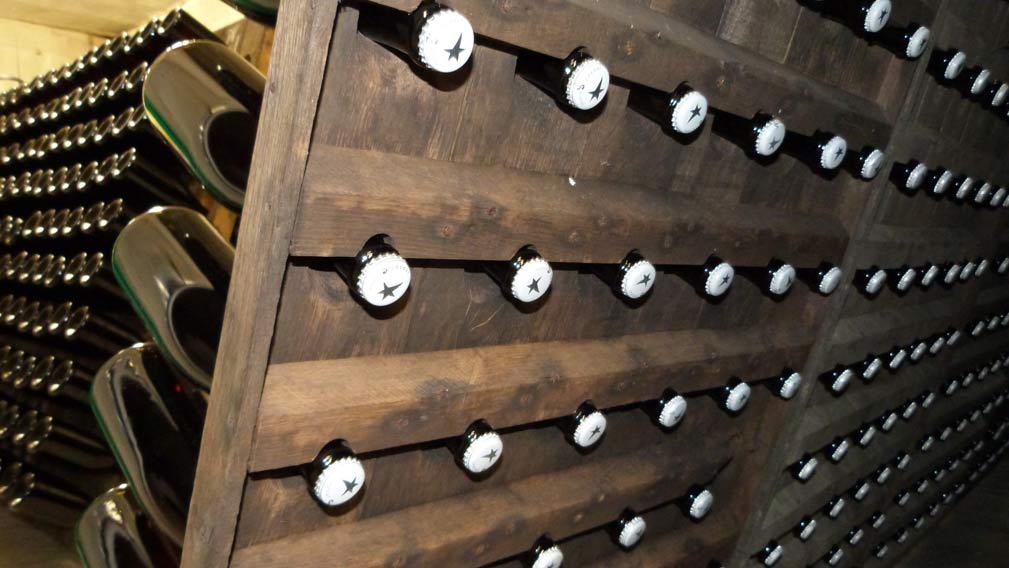

Forest-Marie Champagne Premier Cru Brut Millesime 2012 is backordered and will ship as soon as it is back in stock.
Trigny. "Situated in a village that shares the same Massif de St. Thierry terroir as our long-time favorite, Chartogne-Taillet. Thierry Forest makes forceful champagnes-particularly-notable is his preference for aging his wines much longer than is the norm before release. Almost half the grapes now come from the Premier Cru village of Éceuil. Fermentation is conducted with natural yeasts. 50/50 Chardonnay and Pinot Noir, from the Écueil. this is an excellent successor to the much-lauded 2008. The 2012 is a worthy follow-on in a slightly bigger style."
Shipping
Shipping
Every step of the journey is managed to uphold the integrity of each bottle.
- Nationwide Access: Flat-rate shipping available to most U.S. states with delivery in 3-5 business days.
- Temperature-Monitored Shipping: We closely monitor weather conditions and make informed decisions to ensure shipments travel safely, with insulated packaging and refrigerated transport available when required.
- Wine-Specific Protective Packaging: Specialized materials designed to maintain label integrity and prevent breakage during transit.
- Provenance Assured: All wines are maintained in climate-controlled conditions at our shop until the moment of dispatch.
Returns & Exchanges
Returns & Exchanges
We stand behind every bottle we sell.
- Corked wine? Full refund or exchange within 60 days
- Damaged shipment? Contact us within 48 hours
- Storage or quality concerns? We're here to help
Have Questions?
Have Questions?
Our team is here to help.
Hours
Sunday - Thursday: 12 pm - 8 pm
Friday: 11am - 9pm
Saturday: 10am - 9pm
Email: help@flatiron-wines.com
Phone: (212) 477-1315